
MONGOLIA: Handcut Noodles with Lamb and Veggies (Tsuivan)
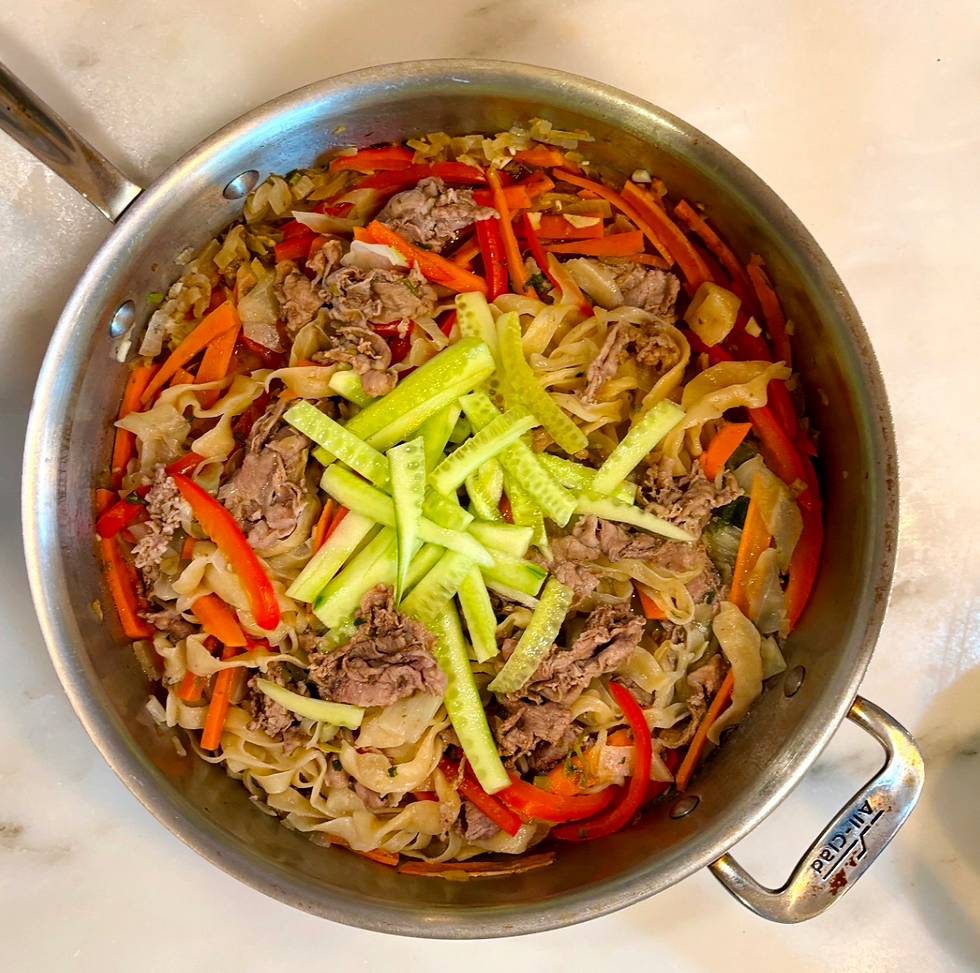
This was a one-and-done recipe for me — although I am glad I went for it — only because hand-rolling noodles pushes the 45-minute mark of active cooking time. That being noted, I can see why tsuivan is ubiquitous in Mongolia. It is a bit like a hug from a grandma. If you wanted to experience the same dish with less effort, you could try it using fresh pasta, which — according to some online research — can be steamed rather than boiled, as called for in this recipe. You could also make the sauce and pour it over cooked egg noodles, but then it might not qualify as tsuivan.
I use AP flour, as GF is not ideal for homemade pasta, so did not try the finished noodles but heard they were quite tender. I put the sauce over Rummo linguini to taste it, so cannot really common on the final dish with knowledge.
Handcut Noodles with Lamb and Veggies (Tsuivan)
2 cups all-purpose flour
½ teaspoon table salt
½ cup + 3 tablespoons canola or olive oil
1 medium yellow onion
2 cloves garlic
2 carrots
1lbs thinly sliced lamb or beef
2 tablespoons soy sauce or tamari
¼ teaspoon table salt
¼ teaspoon black pepper
1 cup shredded green cabbage
1 red pepper, optional
2 scallions thinly sliced
2 tablespoons fresh chopped cilantro
Salt and pepper to taste
2 Persian cucumbers
Place the flour and salt in a large bowl, mix together, and make a well in the center. Add ¾ cup of warm water and mix to combine and form a dough. If too crumbly, add a little water, a tablespoon or two at a time, until it comes together into a smooth ball. If too sticky to handle, add a little more flour. On a lightly floured surface, knead the dough well until elastic. Cover with an inverted bowl and allow to rest for 15 minutes.
Divide the dough into 4 equal pieces and remove 1 to a lightly floured surface for rolling. Recover the 3 remaining pieces while you roll and cut the first. Roll the piece of dough into a thin sheet, about the size of an 8.5x11 sheet of paper, making sure the bottom does not stick to the surface.
Lightly grease the top of the sheet with about 1 tablespoon of oil, using a pastry brush to ensure the pieces is fully covered. (It is traditional to quickly cook both sides of the pasta sheet on a dry griddle before oiling, to prevent sticking, but a few recipes omitted this step, and as I was making the noodles in advance, did not try that.) Loosely roll the sheet up, long side to long side. Using kitchen sheers or a sharp knife, cut the roll into strips about ¼-inch wide.Gently shake the strips loose with your fingers to separate and place on a lightly greased baking sheet or other surface. Repeat with remaining dough. You can stack them on the same cookie sheet, provided you layer them with plastic wrap and brush the wrap with oil before putting down the next layer of noodles.
Dice the onions and mince the garlic. Peel the carrots and cut into think matchsticks. Stem and seed the red pepper and cut into thin strips, if using.
Add 2 tablespoons of oil to a large, lidded sauté pan and heat over medium heat. After the oil is heated, sauté the onions until translucent, about 5 minutes. Add the garlic and carrots, and sauté another 3 minutes.
Add your meat and sauté for another few minutes until the meat starts to brown. Add the soy sauce or tamari, salt, and pepper, and stir well.
Add enough water to cover the meat about halfway. Place the cabbage, red pepper if using, scallions, and cilantro on top. Then put on the lid and steam for about 5 minutes. Open the lid and arrange the cut noodles on top. Recover team for another 5 minutes.
While the noodles steam, cut the cucumbers into matchsticks.
Remove the lid, test that the noodles are cooked through (if not, steam another 2 minutes.) Stir together and taste for seasoning. The water should be largely evaporated into a sauce, but if the mixture is too watery, cook with the lid off for another minute or two.
Serve garnished with cucumbers on top.
FUN FACTS:
The first hotel in Mongolia was the Ulaanbaatar Hotel, which opened in 1961, was the first public building to have hot and cold running water.
Mongolia is the most sparsely populated sovereign country, with an average of 2 people per 5 square miles. There are 13 times more horses in Mongolia than humans.
The oldest legally protected mountain and nature reserve in the world is Bogd Khan Uul National Park in Mongolia, protected since 1778.



Comments